News
Stories making wavesCrocodiles Rock
COMMUNITIES SAVE 'RARE' CROCS IN LAOS
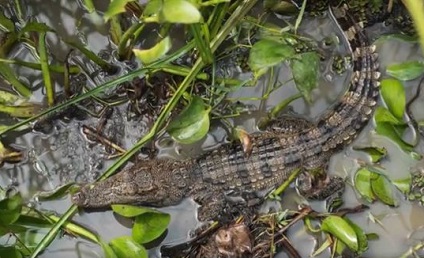
A recent report led by the Wildlife Conservation Society (WCS) shows how long-term, community-based conservation efforts in central Laos, based on cultural and spiritual beliefs, are helping restore one of the world's most endangered crocodilians to wetlands where it had nearly vanished.
Once widespread across Southeast Asia, Siamese crocodiles (Crocodylus siamensis) have suffered catastrophic declines over the past half-century due to habitat loss, hunting and egg collection, and fewer than 1,000 adults are believed to survive in the wild today.
However, research just published in the Newsletter of the Crocodile Specialist Group (part of the IUCN Species Survival Commission), documents steady reproductive success in the Xe Champhone wetlands, in central Laos where annual nest surveys indicate the wetland complex now supports one of the largest remaining wild populations of Siamese crocodiles in mainland Southeast Asia. This is credited to the work of WCS and government partners working closely with local communities since 2011, and the spiritual and cultural beliefs of the 'Village Conservation Teams'.
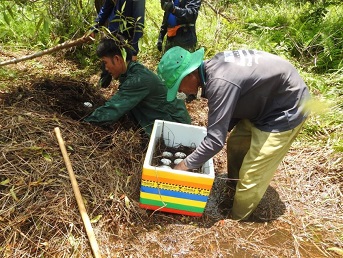
"These locally recruited groups are trained and supported by WCS to monitor crocodile nests, protect eggs from flooding or poaching, and assist with incubation and release efforts," said Santi Saypanya, country director for the WCS Laos Program. "The teams build on long-held cultural beliefs that crocodiles are spiritual guardians, creating powerful incentives for protection."
According to WCS, each year during the nesting season, the teams locate nests constructed on floating mats of peat and vegetation which is critical breeding habitat for the species. Eggs are carefully collected from many nests and incubated in village facilities, where hatchlings are reared until they reach a size less vulnerable to predators. The young crocodiles are then released back into the wetlands using 'soft-release' techniques designed to increase survival.
This is a hopeful example of how collaboration can bring a species back from the brink. "Recovery is possible, even for species on the edge of extinction, when conservation is built around local knowledge, cultural values, and sustained scientific monitoring," said Steven Platt, a WCS conservation scientist who has helped lead Siamese crocodile research and recovery efforts in Laos for more than a decade.
Siamese crocodiles are also considered a keystone species, so the teams work bears additional good news for conservation, with their recovery reflecting improvements in wetland health that also benefits fish and birds.
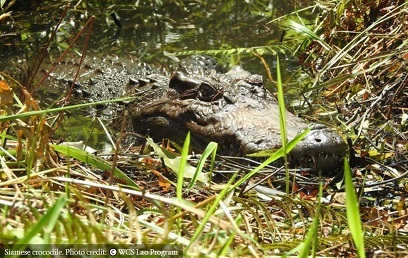
(Photo credits: WCS Laos program)